
At 10:45 p.m., the ballroom doors in Savannah are still open. The destination wedding planner expected to be back at the hotel hours ago, but a delayed flight erased the transfer margin, the room was unavailable at check-in, and the charger remains inside inaccessible luggage. A venue walkthrough moved, vendor coordination expanded, and the phone is now occupied with the most complicated conversations.
At this point, a smartwatch for people who travel a lot has one useful test left: which essential actions still work after the itinerary has stopped cooperating?
A travel-ready watch should preserve a small set of required actions after one delay, one access change, and one extended day. Start at the final travel moment, identify what remains useful, and trace each action backward through its watch, phone, application, connection, and charging dependencies. A listed feature does not survive the disruption when the resource behind it has disappeared.
This is the Itinerary Disruption Buffer. It does not judge the watch during a perfect trip. Instead, it reconstructs why each essential action reached the end of a broken one.
Inventory What Is Still Useful at 10:45 p.m.
Do not begin with the airport, the hotel reservation, or the advertised feature list. Begin where the planner actually needs help: the final unplanned work block.
Four actions matter at the Savannah venue:
- See the current time and the next fixed commitment.
- Recognize whether an incoming contact deserves immediate attention.
- Understand one schedule change that occurred after departure.
- Retain one final alarm, reminder, or countdown.
Record the end-state of each action without explaining it yet:
- Useful: The action still provides enough information or control to complete its purpose.
- Conditional: It remains useful only because a phone, application, or connection is still available.
- Outdated: Information appears, but it reflects the itinerary that no longer exists.
- Unavailable: The action cannot be accessed or completed.
That distinction matters. A visible notification can be outdated. A supported caller-identification feature can become unavailable when the phone connection breaks. An alarm already stored on the watch may remain useful even when new calendar information cannot arrive.
The end-of-day inventory creates four survival threads. Each one will now be followed backward until it reaches the resource that allowed it to survive—or the dependency that caused it to fail.
Trace the Next Commitment Back to Its Source
The planner’s final commitment is a late transportation handoff after the venue walkthrough. At 10:45 p.m., the relevant question is not whether the watch displays a calendar. It is whether the correct departure time remains available.
Start with the cue visible at the endpoint
Suppose the wrist shows an 11:15 p.m. transportation reminder. That cue may have reached the watch through several paths:
- It was created directly on the watch.
- It synchronized from the phone before casual phone access became difficult.
- It arrived through a connected calendar application.
- It was changed after the flight delay and transmitted successfully.
Trace the cue backward. Was 11:15 p.m. the current departure time, or was it copied from the original itinerary before the venue schedule changed?
An available cue can still be wrong
The most dangerous weakness in a disrupted itinerary is not always missing information. Sometimes the old information survives perfectly.
An outdated 10:30 p.m. reminder may appear on time, vibrate normally, and remain easy to read. None of that makes it useful after the handoff has moved to 11:15 p.m.
The thread survives only when the planner can act on the cue that belongs to the revised schedule.
Locate the first dependency
If the correct time appears, identify what preserved it:
- Local watch storage
- Active phone pairing
- Calendar synchronization
- Mobile data
- A change completed before the hotel reset disappeared
If the wrong time appears, stop tracing at the first break. The failure may be an absent connection, delayed synchronization, application restriction, or update that never reached the paired phone.
Travelers evaluating the broader category can first move from frequent-travel needs to a broken-itinerary test. This page examines the narrower question of whether a required cue remains current after the plan changes.
Trace the Priority Contact Back Through the Connection
Near the end of the night, an incoming alert appears while the planner is confirming the final room layout. The contact could be the couple, venue coordinator, transportation provider, florist, photographer, or a low-priority application.
The required wrist action is narrow: identify whether the alert deserves immediate attention.
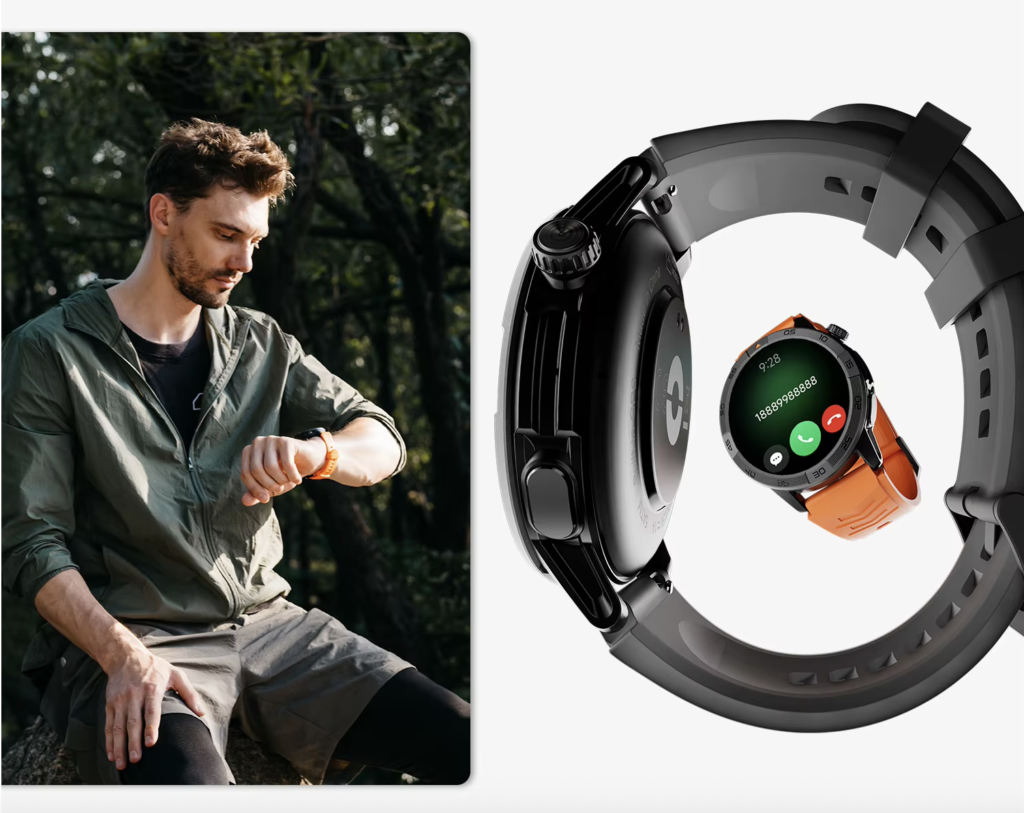
Begin with the context available at the wrist
A contact thread may end in one of four ways:
- A recognizable name appears.
- A sender name and short preview provide enough context.
- Only an application icon or generic alert appears.
- No alert reaches the watch.
The first two outcomes may preserve prioritization. The final two generally send the planner back to the phone.
Follow the identity backward
Caller or sender context may depend on:
- The phone receiving the communication
- An active Bluetooth or network relationship
- Contact permissions
- Notification permissions
- Application behavior
- The phone remaining powered and connected
A watch can be useful without operating independently. The dependency simply needs to remain visible in the buying decision.
For example, a contact-name alert may survive the extended evening because the paired phone is still connected inside a tote. That action passes conditionally. It should not be described as watch-only communication.
Do not require the watch to complete the conversation
A priority-contact cue does not need to replace a detailed vendor call or a complicated reply. Its purpose is to help the planner decide whether the current task should be interrupted.
When a long conversation is necessary, the phone may remain the correct tool. The watch earns travel value by preserving prioritization—not by pretending every exchange belongs on the wrist.
Disrupted travel can also create hurried movement. Complex messages and calls should be moved to a suitable stationary point rather than handled while crossing a vehicle area, entering a venue, carrying materials, or moving through an unfamiliar space. The movement-continuity page explains how to send complex travel interactions to the next safe pause.
Trace the Changed Schedule Back Through Its Synchronization Path
The destination wedding planner originally expected a hotel reset before the venue walkthrough. Once the room became unavailable, the walkthrough moved and a vendor handoff shifted with it.
At the final travel moment, the watch may still show several schedule items. The key question is whether any of them reflect the change.
Separate stored information from newly changed information
Stored information existed before the disrupted day:
- Original venue time
- Planned hotel stop
- Initial transportation window
- Preloaded reminders
New information appeared after the itinerary broke:
- Revised walkthrough time
- Updated vendor arrival
- Changed transportation handoff
- Added evening briefing
A watch may preserve every stored item while losing the updates that now matter more.
Trace the update rather than the display
Begin with the revised schedule cue visible—or missing—at 10:45 p.m. Follow it backward through:
- The watch screen
- The relevant watch application or notification service
- The paired phone
- The calendar, message, or scheduling source
- The moment when the venue change was entered
The first failed handoff explains the result. Perhaps the update reached the phone but not the watch. Maybe the watch displayed a notification but lacked enough text to reveal the new time. In another setup, the update may never have been entered into the synchronized calendar.
Current information outranks abundant information
A watch could show weather, steps, music controls, several old reminders, and a full day of notifications. Those surviving features do not compensate for losing the one updated venue cue the planner needs.
The disruption buffer follows essential travel actions rather than total feature count.
The missing hotel room changed more than charging
Losing access to the room removed several resources at once:
- A planned charging opportunity
- Private time to review schedule changes
- Easy access to luggage and cables
- A predictable phone-handling period
- A point where applications and devices could be checked
That problem differs from habitually forgetting to charge. Readers comparing the two situations can separate a disrupted charging opportunity from a true missed-charge habit.
Trace the Final Reminder Back Through the Lost Reset Point
The fourth survival thread ends with one reminder needed during the added evening block. It might signal a transportation confirmation, vendor departure, document handoff, or final venue check.
Identify where the reminder was created
A reminder created before departure may already be stored on the watch. Another added during the delay could depend on the phone, calendar synchronization, or an application connection.
Those two reminders should not be treated as equally resilient.
Trace the final cue backward:
- Did the watch produce the alarm or vibration?
- Was the correct time stored?
- Did the reminder require a phone connection at the moment it fired?
- Was it created before or after the itinerary changed?
- Did the watch remain available through the extended block?
Do not reduce the thread to a battery percentage
Remaining charge supports the action, but the percentage alone is not the result. A watch can retain power while showing the wrong reminder. Another may preserve an alarm but lose current schedule updates because the connection disappeared.
The action survives only when the correct reminder remains usable at the required time.
The unavailable charger is a condition, not the whole topic
The planner knows a charger exists. It is simply unavailable during the period when the itinerary expected it to be used.
No replacement cable or emergency shopping stop should be added to rescue the test. The purpose is to learn whether the required actions reach the endpoint after one normal reset opportunity vanishes.
Road-trip buyers face a neighboring but different decision involving vehicle time, route length, and planned charging access. That branch can separate itinerary disruption from road-trip battery planning.
Find the First Dependency That Broke
Once all four threads have been reconstructed, do not average the results into a generic travel score. Locate the first broken dependency on each failed thread.
| Survival thread | Required endpoint | First dependency to inspect | Outcome |
|---|---|---|---|
| Next commitment | Correct final handoff time | Stored cue or calendar synchronization | Useful / Outdated / Lost |
| Priority contact | Enough identity to prioritize | Phone connection and notification permission | Independent / Conditional / Lost |
| Changed schedule | Current venue or vendor update | Application-to-phone-to-watch path | Current / Incomplete / Outdated |
| Final reminder | Correct cue during the added block | Reminder storage and continued watch availability | Preserved / Conditional / Lost |
Stored-information failure
The required cue was never saved locally, so it disappeared when the connected source became unavailable.
Phone-access failure
The action still required phone retrieval at a point when handling the phone was difficult or inappropriate.
Connection failure
The watch and phone no longer exchanged the information needed for caller identity, message context, or schedule updates.
Application failure
The relevant calendar, notification, or reminder behavior did not carry the revised information through the required path.
Charging-opportunity failure
The expected hotel reset disappeared, and the watch could no longer support one or more required actions through the added work block.
Finding the break point produces a better buying requirement than saying the watch is “good for travel.” It reveals exactly which resource the user must preserve.
Read the Itinerary Disruption Buffer
Four Threads Intact
The next commitment, priority-contact cue, changed schedule information, and final reminder all remain useful at the late-night endpoint.
Some actions may still be conditional on the paired phone, but those dependencies stayed available and were clearly understood.
Verdict: The watch supports this disrupted destination-wedding routine.
Stored-Action Buffer
Time, preloaded reminders, and locally available cues survive, while newly changed schedule information or live contact context becomes incomplete.
Verdict: Useful for prepared actions, but weak when the itinerary requires fresh updates.
Connection-Bound Buffer
The essential actions remain available only while the paired phone, permissions, applications, and connection continue working.
Verdict: Suitable when the phone relationship remains dependable, not as an independent travel tool.
No Disruption Buffer
The watch’s useful actions depend on the original hotel stop, unchanged schedule, convenient phone access, or expected charging opportunity.
Verdict: The watch works for the ideal itinerary but loses its required value after the trip changes.
Do not compensate for an essential loss
Several surviving recreational or wellness features cannot cancel the loss of the planner’s current commitment, priority-contact cue, updated schedule, or final reminder.
The verdict follows the essential action set.
Turn the Four Survival Threads Into a Buying Rule

The final requirement should state what must reach the disrupted endpoint:
The watch must preserve the planner’s current commitment, priority-contact context, revised schedule cue, and final reminder after one travel delay, one lost access point, and one extended work block.
Compare the same threads across candidates
Keep the following conditions consistent:
- The same paired smartphone
- The same calendar and notification applications
- The same starting charge condition
- The same permissions
- The same four essential actions
- The same simulated itinerary break
Verify the exact phone-and-watch pairing
Calendar detail, notification previews, contact identity, alarms, offline behavior, and synchronization can differ by watch model, smartphone, operating system, and application.
Whether the buyer uses an Apple iPhone or an Android phone, the precise pairing matters more than a broad claim such as “travel notifications supported.”
Simulate disruption without creating travel risk
A buyer does not need to miss a real flight or lose access to essential equipment. A safer U.S. workday test can:
- Keep the charger unavailable until the next morning.
- Change one calendar commitment after the test begins.
- Limit casual phone retrieval for one work block.
- Add one evening responsibility.
- Trace the four actions backward at the end.
Access needed for identification, transportation, emergencies, or personal safety should never be withheld for the sake of the test.
Questions About Smartwatches and Disrupted Travel
What counts as an essential travel action?
An action is essential when losing it would interfere with the traveler’s next fixed commitment, priority communication, or time-sensitive responsibility. Optional entertainment, wellness, and social functions should not be added merely to improve the result.
Can a phone-dependent function survive the disruption?
Yes. A phone-dependent function can pass when the phone, pairing, permission, and required connection remain available through the disrupted period. Record it as conditional rather than independent.
Does long battery life guarantee a strong disruption buffer?
No. Endurance can support continuity, but the correct schedule update, notification context, application behavior, and phone relationship must also remain available.
What if the watch shows an old reminder?
An outdated reminder is available but not useful. The survival thread passes only when the displayed cue reflects the current itinerary.
Should boarding passes, maps, or payments be included?
Include them only when the traveler genuinely depends on those actions and the exact watch, phone, application, and provider support the required behavior. Adding them automatically would turn the test into a general travel-feature list.
Is the extended evening only a battery test?
No. It also examines whether the correct reminders, live contact context, updated information, and phone relationship remain usable through the added block.
How does this differ from a travel packing guide?
A packing guide asks what to bring. The Itinerary Disruption Buffer starts after the needed equipment has become inaccessible and traces which essential watch actions still reach the end of the day.
A Travel Watch Earns Its Place at the Broken Endpoint
At 10:45 p.m., the Savannah planner no longer needs proof that the watch worked during the original schedule. That itinerary disappeared hours ago.
The relevant evidence sits at the endpoint. Is the next commitment current? Can a priority contact be recognized? Did the revised schedule reach the wrist? Will the final reminder still occur?
Each surviving action should be traced backward until the resource behind it becomes visible. A failed thread should stop at the first broken phone, application, connection, storage, or charging dependency.
For a smartwatch for people who travel a lot, travel value appears after the schedule stops cooperating. Start at the final unplanned moment, follow the required actions back through the day, and count only those that remain useful after the original itinerary has failed.
Reconstruct one disrupted trip from its late endpoint and expose the dependency behind every surviving action. Before choosing a watch, trace its functions through your travel-survival path and approve only the cues, contacts, updates, and reminders that still reach the end of the changed day.