
Omarek costs $150. Fitbit Charge 6 carries a regular price of $159.95. Apple Watch SE 3 starts at $249, while Garmin vívoactive 6 is priced at $299.99.
Those price gaps create the real fitness smartwatch buying question: what must the extra $9.95, $99, or $149.99 accomplish before a premium platform deserves your money?
Omarek is the stronger everyday-training value when you need recreational fitness tracking, built-in GPS, offline maps, Bluetooth calling, notifications, and lower charging pressure in one $150 watch. Pay more only when a competitor’s coaching, recovery tools, compact design, or phone integration will change something you do every week.
Put the Additional Spending on Trial
A higher price is not evidence of higher personal value. The premium must prove that it changes your workout, improves an important ownership task, or prevents a limitation you would otherwise regret.
Start with the difference between Omarek and each alternative:
- Fitbit Charge 6 asks for an additional $9.95 at its regular price.
- Apple Watch SE 3 asks for at least $99 more.
- Garmin vívoactive 6 asks for an additional $149.99.
Temporary promotions can change checkout prices, but the buying logic remains the same. Every extra dollar needs a job.
A premium fails its case when it purchases information you rarely review, applications you never open, or coaching you do not follow. Omarek fails when one of its undocumented capabilities is essential to your normal training.
This article therefore does not rank products by total features. Each watch must present evidence that its specific advantage matters to the buyer considering it.
Omarek Establishes the $150 Evidence Baseline
The baseline is not the cheapest possible fitness device. It is the least expensive product in this comparison that can credibly combine recreational fitness, outdoor utility, and everyday smartwatch functions.
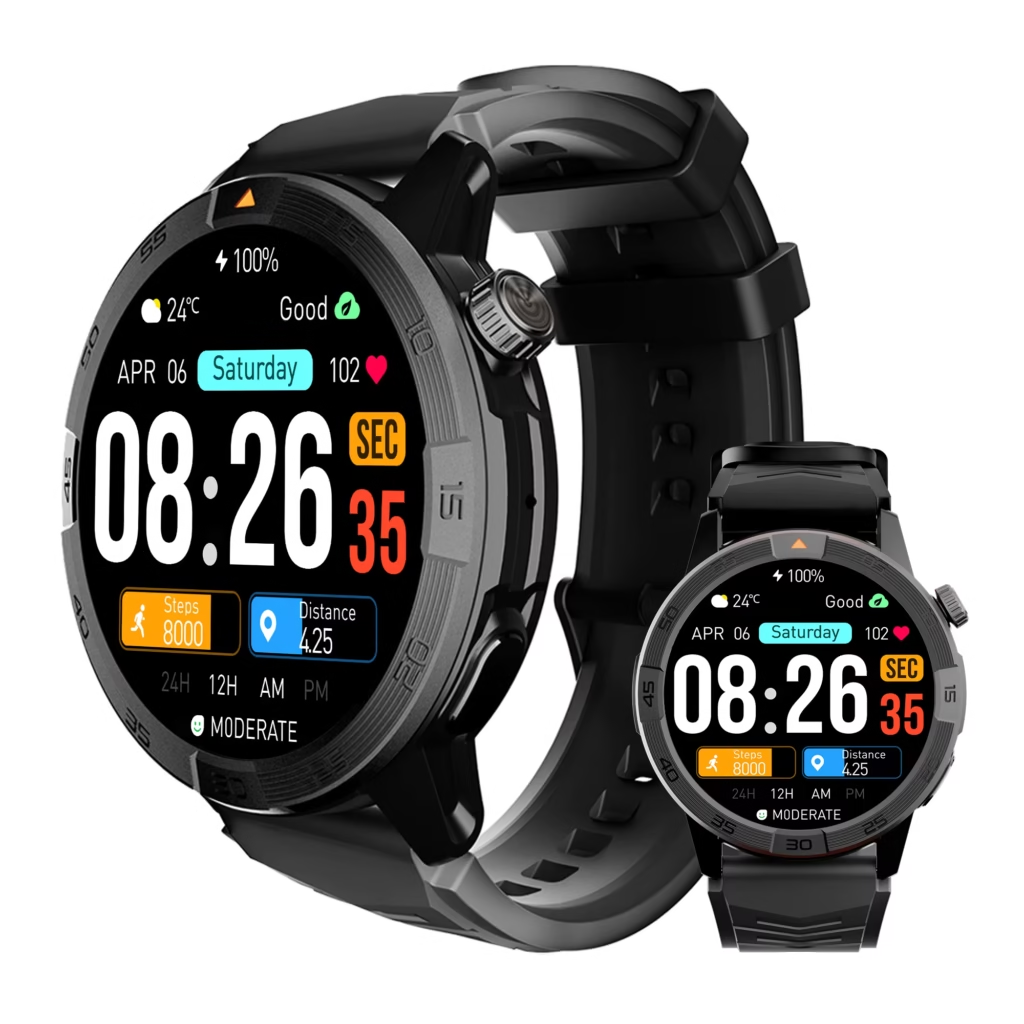
Omarek’s current listing documents activity and fitness tracking, heart-rate monitoring, sleep tracking, steps, calories, breathing information, and multisport modes. That creates a general wellness and workout foundation rather than a specialist training system.
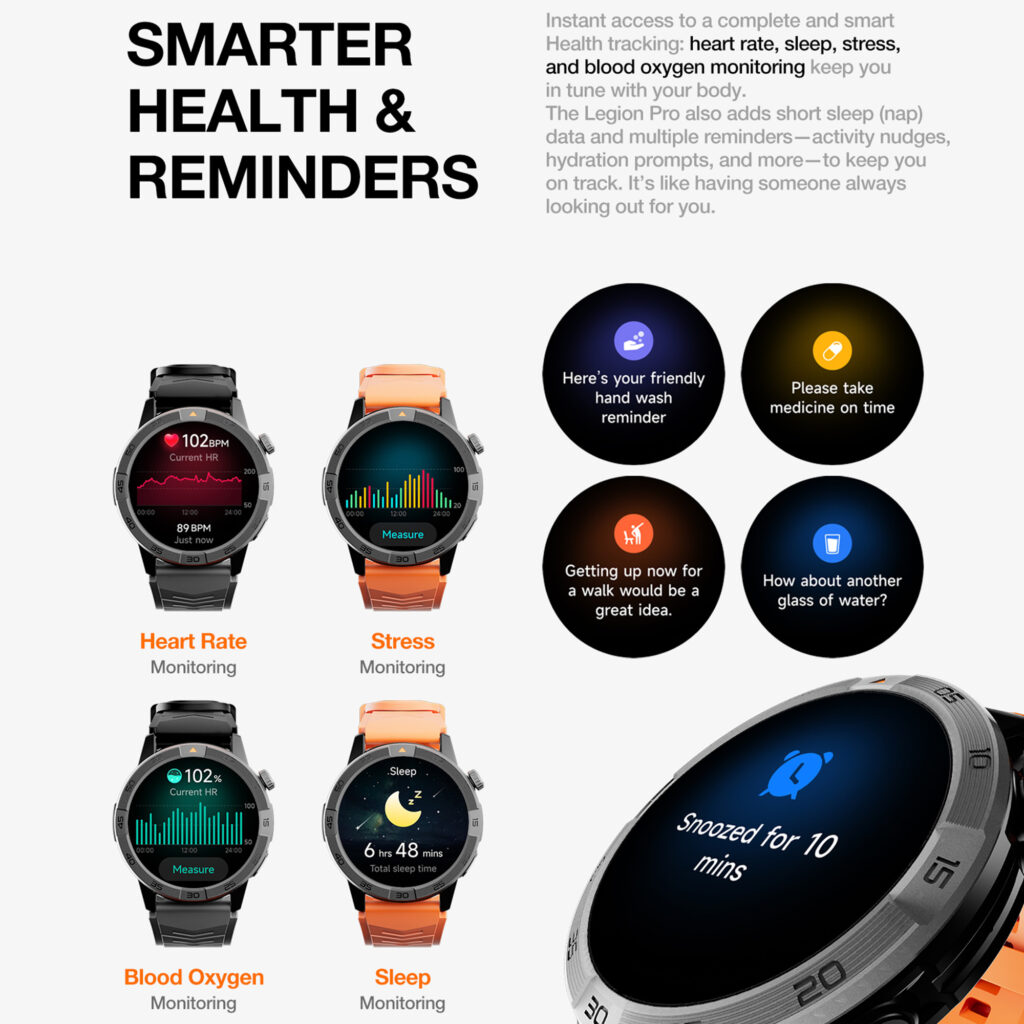
Built-in GPS and offline maps add a separate form of value. A recreational runner, walker, or hiker may use those tools to reduce repeated phone handling during outdoor activity.
Bluetooth calling, notifications, music control, alarms, and calendar access help the watch remain useful after the workout ends. That matters because a fitness product worn only during exercise must justify its cost through fewer weekly hours.
The seller also states battery life of up to 30 days from a 370mAh battery. Actual runtime will vary with GPS, calling, display settings, alerts, connectivity, and other enabled functions.
Omarek’s Baseline Brief
Price requested: $150 with free shipping.
Workout evidence: General activity tracking, heart-rate awareness, multisport modes, built-in GPS, and offline maps.
Daily-use evidence: Bluetooth calling, notifications, music control, alarms, calendar access, and an AMOLED display.
Limitation disclosed: The current listing does not document structured coaching, training readiness, recovery scores, running dynamics, automatic repetition counting, or a large fitness-app ecosystem.
Buyer who benefits: Someone who exercises regularly but does not need an advanced platform to plan or interpret every workout.
That is Omarek’s specific value proposition for this search:
Omarek distributes the purchase price across everyday exercise, outdoor use, and normal smartwatch convenience instead of concentrating it in specialist analytics.
Review the current Omarek listing and purchase terms before using it as your baseline.
A Fitness Premium Has Three Facts to Prove
A more expensive product should not win by displaying a longer specification list. It must prove three facts.
Fact One: The Added Tool Solves a Recurring Problem
A feature used during one annual trip or a future race you have not entered carries weak commercial value. A feature used during three workouts every week has a stronger case.
Write down the specific moment when the premium tool would help. “Better fitness features” is too vague. “Adaptive running sessions that select tomorrow’s workout” is testable.
Fact Two: You Will Act on the Information
Recovery, readiness, cardio-load, sleep, and training reports can be useful. They create purchase value only when you understand them and allow them to influence a decision.
A more detailed dashboard does not improve training by itself. The buyer must open it, interpret it, and change something.
Fact Three: Omarek Cannot Adequately Cover the Same Need
A competitor should earn the premium when it documents a material capability that Omarek’s current listing does not establish.
Paying extra for another version of steps, notifications, basic heart-rate awareness, and workout recording is harder to defend. The premium needs to create a different result, not merely a different interface.
Use the smartwatch listing decoder to separate documented capability from promotional language. The quality-evidence guide can also help you judge whether a claimed advantage has enough support to influence checkout.
Cross-Examination One: Does Garmin Coaching Change Your Training?
Garmin vívoactive 6 presents the strongest case for buyers who want their watch to do more than record completed workouts.
Garmin documents more than 80 sports applications, adaptive Garmin Coach plans, recovery time, workout benefit, running dynamics, PacePro guidance, HRV status, Body Battery information, and other deeper fitness and wellness tools.
The product costs $299.99, creating a $149.99 premium over Omarek.
Garmin’s Premium Brief
Premium requested: $149.99 above Omarek.
Material advantage: A deeper system for planning, measuring, reviewing, and adjusting training.
Use frequency required: Several meaningful interactions each week with coaching, recovery, pacing, or performance information.
Buyer who clears the premium: A runner or active buyer who follows structured plans and changes training according to watch data.
Reason the premium fails: The buyer records workouts but rarely studies recovery, follows coaching, or adjusts sessions from platform recommendations.
Garmin deserves the sale when the watch will help answer questions such as:
- What workout should I complete today?
- How much recovery does the platform recommend?
- How should I pace a planned run?
- What did my form or workout load indicate?
Omarek remains stronger when your questions are simpler:
- Did I complete the activity?
- What route-related information is useful?
- What was my general heart-rate or activity pattern?
- Can I stay connected without repeatedly handling my phone?
Do not purchase Garmin merely because coaching exists. Approve the premium when you are prepared to follow it.
Cross-Examination Two: Does Fitbit’s Compact Focus Fit Better?
Fitbit Charge 6 does not need to prove a large price advantage because its regular $159.95 price sits only $9.95 above Omarek.
Its case rests on a different product shape and fitness emphasis. Google documents more than 40 exercise modes, built-in GPS, Active Zone Minutes, cardio load, Daily Readiness, heart-rate connectivity with compatible exercise machines, automatic exercise recognition in the app, and up to seven days of stated battery life.
Some coaching and readiness value is connected to Google Health Premium, so buyers should verify which functions require membership and what happens after any included trial ends.
Fitbit’s Premium Brief
Premium requested: $9.95 at regular official pricing.
Material advantage: A compact tracker-first design with Fitbit and Google health-and-fitness tools.
Use frequency required: Regular interaction with heart-rate zones, readiness, cardio load, exercise recognition, or compatible gym equipment.
Buyer who clears the premium: Someone who wants fitness tracking to dominate and prefers a smaller wearable over a round general-purpose smartwatch.
Reason the premium fails: Bluetooth calling, offline maps, a larger interface, and broader daily smartwatch use matter more than tracker-focused ownership.
Fitbit should win when the buyer values compact wear and its particular fitness environment. Omarek should win when fitness must coexist with short wrist calls, offline maps, and a more conventional smartwatch experience.
This is not a simple “better tracker” decision. First confirm which wearable category fits your routine. A compact tracker and a full smartwatch can charge similar prices while delivering different ownership experiences.
Cross-Examination Three: Does Apple Integration Earn $99?
Apple Watch SE 3 starts at $249, creating a minimum $99 premium over Omarek.
Apple documents GPS, workout functions, high and low heart-rate notifications, irregular-rhythm notifications, sleep tracking, safety features, an application platform, and close integration with the iPhone.
Apple states up to 18 hours of normal battery life and up to 32 hours in Low Power Mode. Fast charging reduces some inconvenience, but the charging rhythm remains different from a watch marketed around a longer maximum.
Apple’s Premium Brief
Premium requested: At least $99 above Omarek.
Material advantage: Deeper participation in an iPhone-centered routine through Apple services, applications, safety tools, and connected interactions.
Use frequency required: Daily use of Apple-specific functions that Omarek does not document.
Buyer who clears the premium: An iPhone owner who wants the watch to become a meaningful extension of Apple’s ecosystem.
Reason the premium fails: The buyer mainly needs recreational fitness, basic calls and alerts, GPS-related outdoor utility, and lower ownership complexity.
Apple should not win solely because the buyer owns an iPhone. The premium is justified when Apple-specific behavior matters enough to influence everyday use.
Check the exact functions you expect through the guide to matching a smartwatch with your phone. Android buyers considering Omarek should separately verify the companion app and permissions.
Evidence That Clears a Premium Purchase
The premium receives approval when the evidence is specific, recurring, and consequential.
Specific means you can name the function rather than saying the competitor is “more advanced.”
Recurring means it appears in your normal week, not an occasional scenario.
Consequential means its absence would weaken a workout, create ownership frustration, or force an early replacement.
Approve Garmin’s Premium When
You will follow adaptive coaching, use recovery guidance, review running dynamics, or rely on Garmin’s deeper training environment several times each week.
Approve Fitbit’s Position When
You prefer compact tracker wear and will use Fitbit’s zones, cardio-load, readiness, exercise-recognition, or compatible-machine functions more than Omarek’s calling and offline-map advantages.
Approve Apple’s Premium When
Apple applications, safety features, richer iPhone interaction, and ecosystem continuity form part of everyday ownership—not merely setup-day curiosity.
A premium may also be justified by a missing capability outside these examples. The required feature should be verified on the exact product, phone, region, and configuration before checkout.
Use the smartwatch budget verification process to include accessories, subscriptions, service charges, and replacement risk. The monthly-upkeep guide can expose costs hidden behind the initial product price.
Evidence That Keeps the Purchase With Omarek
Omarek retains the sale when the premium evidence remains general or weak.
The case favors Omarek when your routine consists of recreational workouts, outdoor activity, general wellness awareness, selected notifications, brief calls, and normal smartwatch controls.
Its $150 price becomes especially persuasive when several documented functions receive use. One day may involve an outdoor walk with GPS-related utility. Another may involve a gym session, music control, and a quick alert check. The same watch can continue serving calls, alarms, and calendar access afterward.
Omarek also benefits when lower charging pressure matters. Its up-to-30-day claim is seller-stated and should not be treated as guaranteed under heavy GPS or calling use. Even so, the ownership proposition is different from a watch built around daily or near-daily charging.
Comfort and compatibility can still overturn the recommendation. Measure your wrist and remove unsuitable sizes before ordering. Buyers who prefer fewer applications and less platform management should also consider the principles in the low-maintenance smartwatch guide.
The official Omarek page currently shows no customer reviews. That does not establish poor quality, but it removes one source of social proof. Product documentation, shipping terms, return terms, first-week testing, and direct fit evaluation therefore carry more weight.
Follow the first-week smartwatch readiness checks promptly after delivery. Test pairing, permissions, a familiar workout, GPS behavior on a known safe route, comfort, notification filtering, and a suitable Bluetooth call.
Buyer Objections Before the Verdict
Eight Last-Minute Questions That Can Still Stop the Sale
A fitness smartwatch can look suitable until one practical ownership detail appears at checkout. These questions address situations not covered in the main comparison and can confirm Omarek, expose a missing requirement, or justify delaying the order.
Can I leave my phone in a gym locker and still receive calls?
Omarek documents Bluetooth calling, which normally depends on a connection to a compatible phone. The current listing does not document standalone cellular or LTE service.
A buyer who plans to leave the phone far from the workout area should verify the expected Bluetooth range and connection behavior. When independent calling is essential, choose a watch and service plan that clearly document cellular operation.
Will the display be readable during a bright lunch-break workout?
Omarek lists a 1.43-inch AMOLED display with 466×466 resolution. The current product page does not separately document maximum brightness, outdoor readability testing, or an automatic brightness specification.
A buyer who exercises outdoors at midday should test the screen under direct daylight during the return period. A sharp indoor display does not automatically prove that workout information will remain easy to read in bright conditions.
Does Omarek automatically pause a workout at stoplights?
The current listing does not document automatic pause, interval prompts, pace alerts, or automatic lap behavior.
Those functions may matter to someone following timed intervals or moving through an area with frequent stops. Verify them before purchasing rather than assuming they are included with GPS or multisport tracking.
Can I send my workout history to another fitness platform?
The current Omarek listing does not clearly document direct synchronization with services such as Strava, Apple Health, Google Fit, or other third-party training platforms.
A buyer who keeps years of activity history in another service should verify the companion app, supported integrations, and export options before ordering. A watch can record useful information while still creating an inconvenient data gap.
Will I need a paid subscription after buying the watch?
The current listing does not document a required paid membership for the advertised Omarek functions. Buyers should still inspect the companion app and setup process for optional purchases, account requirements, or services not explained on the product page.
This check matters for someone choosing Omarek to avoid the continuing cost of a larger fitness platform. The full ownership price includes anything required to keep the preferred functions available.
What should I buy when my workouts change with the seasons?
Choose for the activity pattern that covers most of the year. A buyer who uses indoor equipment during winter and takes long recreational walks during warmer months may benefit from broad fitness tracking and outdoor GPS utility in one watch.
Do not pay for a highly specialized seasonal feature unless its absence would make the watch unusable during that part of the year. Omarek fits better when the changing routine still depends on general activity awareness, connected convenience, and outdoor support.
Can Omarek recognize a group fitness class without manual setup?
The product listing documents multisport modes, but it does not clearly establish automatic workout detection, automatic class recognition, or support for every named studio activity.
A buyer who moves quickly from warm-up to class should confirm whether the intended mode must be started manually and whether the required information remains visible during the session. Convenience at the beginning of the workout may matter more than the total number of available modes.
How should a shift worker test the battery claim?
A rotating schedule can make regular charging harder because sleep, work, and workout windows change throughout the week. Test Omarek through several real workdays rather than judging battery performance from one quiet weekend.
Use the notifications, calls, screen settings, and workouts that normally occur. The seller-stated maximum is less important than whether the watch reaches the buyer’s next reliable charging opportunity without interrupting activity tracking.
What is the clearest reason to postpone buying Omarek?
Postpone the order when one purchase-critical requirement remains undocumented. That could be independent cellular calling, a specific workout automation, third-party data synchronization, outdoor screen performance, or a required application connection.
Waiting for evidence is better than purchasing based on an assumption and discovering the limitation after setup.
The Verdict: Has the Premium Proved Enough?
Garmin wins when structured training and recovery information will shape multiple workouts each week. Fitbit wins when compact tracker ownership and its fitness environment fit better than a broader smartwatch. Apple wins when deep iPhone integration creates daily value beyond exercise.
Omarek wins when none of those specialist arguments proves essential.
Its documented mix of recreational fitness tracking, GPS, offline maps, calling, notifications, and seller-stated long battery life covers the workout-first buyer who still expects the watch to serve the rest of the day.
The conclusion is not that premium watches charge too much. It is that their added cost must purchase a result you can name.
Issue Your Fitness Smartwatch Verdict
Write down the premium feature you are being asked to fund. Name the workout or ownership decision it will change and estimate how often that change will occur.
Approve the premium when the evidence is specific and recurring. When the additional technology cannot prove that it will improve your normal week, Omarek’s $150 everyday-training package retains the purchase.