
Before the commercial fleet-parts counter opens in Oklahoma City, three cardboard watch outlines sit beside a work shirt, a light jacket, and a blank evidence card. Each outline shows the full case boundary, the strap exits, and the exact positions of the crown and buttons. None shows a price, color, screen specification, or feature badge. For this buyer, choosing an Android watch for men starts with a simpler question: can the case sit, turn, and operate correctly on his actual wrist?
Candidate A’s display opening looks generous, but its marked crown enters the back-of-hand clearance zone during a gentle seated wrist movement. Although Candidate B stays inside the wrist edges, it rocks at normal paper-band tension. Through both checks, Candidate C remains neutral. It has not won; it has only qualified for the Case-Control Geometry Check.
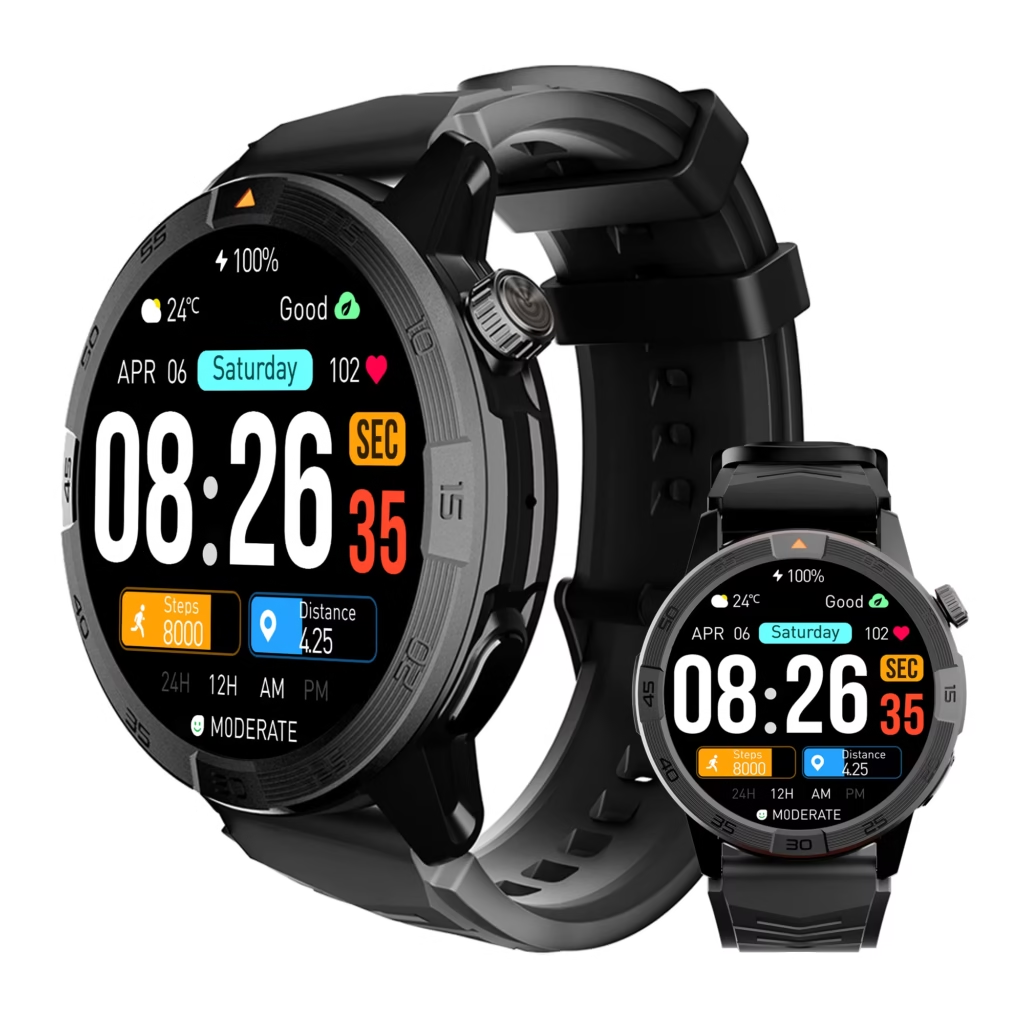
How to Match an Android Watch for Men to One Actual Wrist
Match the full case and control layout to the buyer’s wrist before comparing screens or features. Reproduce the candidate’s outer footprint at actual size, mark every crown and button, place the template on the usable wrist platform, and test six things: edge overhang, hand collision, natural viewing angle, control reach, cuff clearance, and stability at normal band tension.
- Verify the candidate’s complete case dimensions.
- Build an actual-size cardboard footprint.
- Mark the crown, buttons, lugs, and strap exits.
- Place the template on the buyer’s normal wearing position.
- Run the six geometry gates while safely stationary.
- Reject any candidate that needs a physical compromise to remain usable.
This test belongs after the device category is defined. Readers still choosing can use a broader Android smartwatch selection process or compare the main Android watch architectures. Here, the only decision is whether a shortlisted case works on one wrist.
Why Bigger Is Not Better for This Oklahoma City Buyer
The phrase “for men” describes the search, not the sizing rule. The Oklahoma City manager does not need a watch because it looks large, rugged, or traditionally masculine. He needs a case that supports short, stationary glances at non-sensitive task reminders and allows direct control access without interfering with his shirt cuff, light jacket, or hand movement.
A larger display helps only when the housing remains manageable. Overhang, hand contact, poor viewing orientation, or excessive strap tension can erase its advantage. A smaller candidate can also fail through long lugs, awkward controls, or unstable strap geometry.
That is why the manager defines the watch’s job before he judges the body. The watch-role contract method helps separate required actions from attractive extras. Here, the required physical role is limited: remain readable, reachable, clear of the cuff, and stable at normal tension.
Build the Case-Control Test Before the Parts Counter Opens
The manager performs the entire check at a clear desk before active work begins. He is not assisting a customer, moving parts, handling a cart, carrying files, or walking through the facility. The test kit contains stiff paper or thin cardboard, a ruler, scissors, a pencil, a removable paper band, the normal work shirt, the light jacket, and one evidence card.
For each candidate, he copies dimensions from a reliable current source. The template represents the complete housing, not merely the advertised display. Available lug, attachment, thickness, and protruding-control measurements are added. If a required measurement is missing, the candidate becomes Template Unresolved; photographs cannot supply the distance.
Every template marks the full case boundary, visible display opening, crown, required buttons, and strap-exit direction.
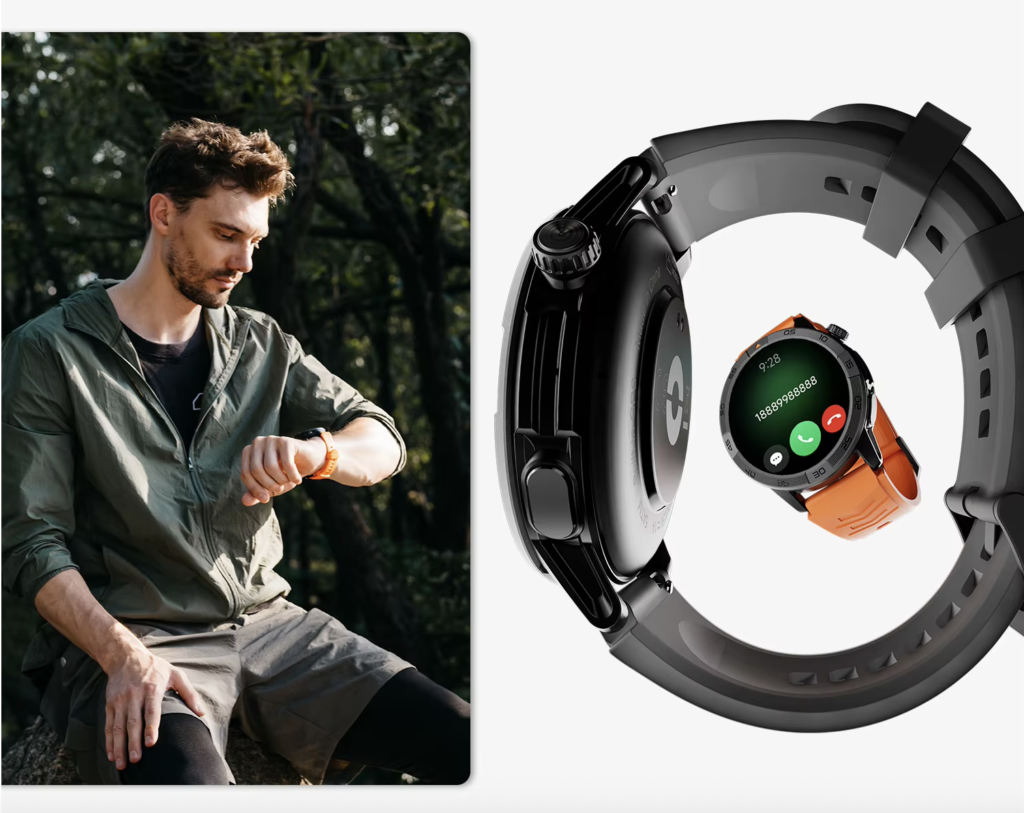
This process does not prove Android compatibility. A product label can still be vague, so the buyer should separately verify what an Android smartwatch label actually means and confirm that the required companion application is available. Physical geometry and technical compatibility require different evidence.
Trace the Usable Wrist Platform, Not Just Circumference
Wrist circumference helps with strap length, but it does not reveal the shape of the top surface where the watch must sit. The manager traces the usable platform at his normal wearing position. He does not trace the entire wrist as though every millimeter were equally suitable. The boundary stops where the case would begin to roll sharply toward either edge or enter the hand-clearance zone.
He also marks the normal strap path and where the wrist widens toward the hand. No universal “men’s size” table can replace this map: equal nominal diameters can hide different shapes, lugs, controls, and strap exits.
The template must lie naturally. The manager does not press it flat, pull the paper band tight, or shift it toward the forearm just to make a large outline appear acceptable. The purpose is elimination, not persuasion. This follows the same principle used in a critical-fit elimination process: one non-negotiable failure can remove a candidate before attractive extras distort the decision.
Gate 1: Keep the Full Case Inside the Wrist Boundary
Candidate A enters first because its display opening is the largest. The manager centers the strap path and checks the entire outer body, not just the screen. One side approaches the traced edge, and the crown side extends farther because the control protrudes beyond the main outline.
A pass requires the complete footprint to remain inside the usable platform. Even slight overhang can encourage rocking, cuff contact, or control movement toward the hand. Candidate A proceeds only to the decisive collision check; its screen advantage earns no credit.
Gate 2: Check Crown and Button Collision While Stationary
Still seated, the manager relaxes his forearm on the desk and makes a gentle wrist movement similar to the position he uses when reaching for a keyboard or paper record. He does not force the wrist to an extreme angle. The marked crown on Candidate A enters the back-of-hand clearance zone and touches the boundary he established before testing.
That contact eliminates Candidate A. The result does not condemn large watches; it shows that this case-and-control arrangement collides with this buyer’s hand at his chosen wearing position. The method will not rescue it by shifting the watch and rewriting the requirement after failure.
Gate 3: Preserve the Natural Parts-Desk Viewing Angle
Candidate B and Candidate C proceed. The manager places a privacy-safe sample reminder inside each marked display opening. It contains no customer name, order number, vehicle identifier, vendor information, or internal system detail. The purpose is to judge viewing geometry, not software performance.
With his forearm in the normal desk position, he glances at the template without lifting the elbow or rotating the arm dramatically. Candidate B’s display window remains visible, but the case begins to roll slightly toward the wrist edge. Candidate C stays oriented toward the natural line of sight.
A pass requires the information area to remain readable without repeated arm twisting, case repositioning, or band tightening. It does not prove brightness, text size, notification quality, or application behavior.
Gate 4: Reach Each Required Control Without Distorting the Wrist
The manager operates the watch with the opposite hand. He traces a finger path to the crown and each required button while keeping the wearing wrist neutral. Candidate B’s controls are reachable, but the side button sits close enough to the cuff-side edge that his finger partially covers the display opening. Candidate C offers a clearer approach lane.
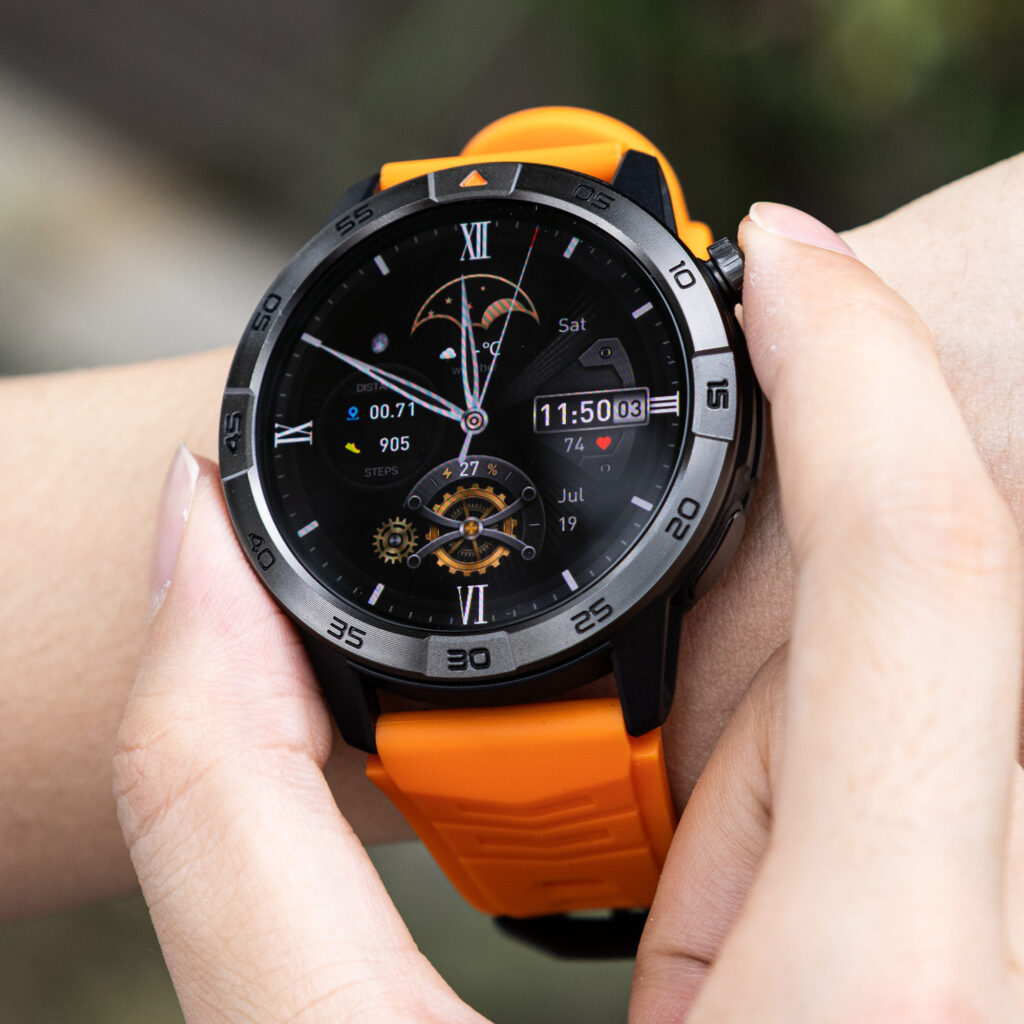
The control-access gate asks four practical questions:
- Can the buyer distinguish the required controls by position?
- Can he reach them without pinching skin?
- Can he press or turn them without bracing the watch?
- Can he operate them without forcing the wrist into an awkward angle?
The test does not evaluate what a button launches. Before purchase, the manager must still match the watch to the exact Android phone setup. Candidate C earns only a physical-access pass here.
Run the Oklahoma City Work-Cuff Clearance Test
The manager now puts on the same long-sleeve work shirt used during a normal stationary office period. He tests two acceptable arrangements: the cuff passing over the case and the cuff resting behind it. He repeats the check with the light jacket. The cuff must not repeatedly drag the case, block the necessary viewing area, hide the controls, or change the strap position.
Candidate B’s shape creates a problem that was not obvious from diameter alone. As the shirt cuff passes over the template, it catches the upper edge and nudges the case toward the wrist side. The jacket increases the movement. Candidate C allows the cuff to pass with less disturbance and remains aligned when the cuff settles behind it.
This is not a fashion test. The question is whether ordinary work clothing changes the case position enough to reduce viewing or control access.
Gate 6: Reject a Case That Needs Excess Band Tension
Before the trial, the manager marked his normal paper-band tension. Candidate B rocks at that setting. Pulling the band one position tighter stops the movement, but the tighter setting was not part of the original requirement. The method therefore rejects Candidate B rather than allowing excessive tension to disguise unstable geometry.
Candidate C remains aligned at the normal marker. Its success does not prove all-day comfort because the cardboard has no real weight, material, heat, or sensor housing. A separate all-day wrist-comfort method can show how extended wear needs different evidence, while a wearability-profile comparison can help buyers choose a broad form before testing exact candidates. This method stops at short, controlled geometry.
Record Every Result on a Case-Control Evidence Card
The manager records each observation immediately so that screen appeal or feature claims cannot rewrite the result later.
| Evidence field | Candidate A | Candidate B | Candidate C |
|---|---|---|---|
| Dimension source | Verified | Verified | Verified |
| Wrist boundary | Marginal | Inside | Inside |
| Hand clearance | Collision | Clear | Clear |
| Natural viewing window | Not continued | Case rolls | Stable view |
| Control access | Not continued | Reachable with obstruction | Direct |
| Work-cuff clearance | Not continued | Case displaced | Clear |
| Normal-tension stability | Not continued | Fails | Passes |
| Geometry verdict | Rejected | Rejected | Approved |
“Not continued” is not a missing score. A critical failure ends the trial, while an unresolved official dimension blocks a pass.
Compare the Three Oklahoma City Case Footprints
Candidate A offered the largest apparent display opening, but its crown entered the hand-clearance zone. Although Candidate B looked more compact and provided reachable controls, its case shifted under the work cuff and stabilized only under excess tension. By contrast, Candidate C cleared every required gate at the buyer’s normal wearing position.
The result is:
Buyer-Specific Case-Control Fit Approved — Candidate C Clears the Oklahoma City Geometry Check at Normal Band Tension.
The verdict cannot transfer to another wrist, wearing position, strap, or case version. It also cannot establish Android support, battery endurance, calling, location performance, sensor accuracy, or notification actions.
Correct Five Android Watch for Men Sizing Mistakes
1. Assuming a Man Should Choose the Largest Case
The search category does not define the buyer’s wrist platform. Start with the actual wearing surface and required actions.
2. Comparing Display Size Instead of the Complete Footprint
The housing, lugs, strap exits, crown, and buttons can create failures outside the advertised screen area.
3. Ignoring Control Position
Two similar cases can behave differently when one crown approaches the hand or one button sits under the cuff edge.
4. Testing Without Normal Work Clothing
A bare-wrist fit can hide cuff obstruction, case displacement, and control blockage.
5. Tightening the Band Until the Case Behaves
Excess tension is not a valid correction for unstable geometry. The candidate must remain aligned at the buyer’s declared normal setting.
Questions U.S. Buyers Ask About Smartwatch Case Fit
Is Case Diameter Enough to Choose a Smartwatch?
No. Diameter leaves out the complete footprint, control protrusions, strap exits, viewing angle, cuff behavior, and tension needed for stability.
Should an Android Watch for Men Always Have a Large Display?
No. A larger display is useful only when the full case remains viewable, reachable, stable, and clear of the buyer’s hand and clothing.
Can a Cardboard Template Prove All-Day Comfort?
No. It can eliminate obvious geometry failures, but it cannot reproduce real weight, materials, heat, sensor housings, or extended wear.
What if the Official Dimensions Are Incomplete?
Mark the candidate unresolved. Do not estimate the missing measurement from promotional artwork or assume that a similar version uses the same body.
Does Passing This Test Prove Android Compatibility?
No. The buyer must still verify the phone, application, permissions, and required actions independently.
Choose the Case-Control Geometry That Works on Your Wrist
At the end of the Oklahoma City desk test, the cardboard footprints no longer represent “large,” “medium,” and “small.” Candidate A loses because its crown collides with the hand. For Candidate B, the cuff shifts the case and normal band tension cannot stabilize it. By contrast, Candidate C remains viewable, reachable, cuff-clear, and aligned.
The Case-Control Geometry Check therefore supports one limited decision: Candidate C fits this buyer’s wrist geometry for the tested stationary routine. It does not prove all-day comfort, Android compatibility, application support, battery life, calling, GPS, health performance, or long-term ownership quality. Those limits matter. The useful case is not the one that appears largest or smallest. It is the one that works without demanding a new physical compromise.
Before considering this smartwatch product candidate, verify its exact case dimensions and control positions, build the same actual-size template, and run every geometry gate independently.