
At the end of a Wednesday, four buyers can see the same 4,800-step total and receive four different kinds of value from it. A commuter may have accumulated those steps between a parking lot, train platform, office, and evening errands. A remote worker may have reached the number only because scheduled breaks interrupted an otherwise seated day. A weekend hiker may consider the total irrelevant until Saturday. A recreational gym member may care less about the step count than whether the planned workout happened.
The number did not change. The decision around it did.
That is why the best fitness monitor cannot be selected by counting sensors or ranking specification lists. The useful product is the one that presents the right information at a moment when the buyer can still do something with it.
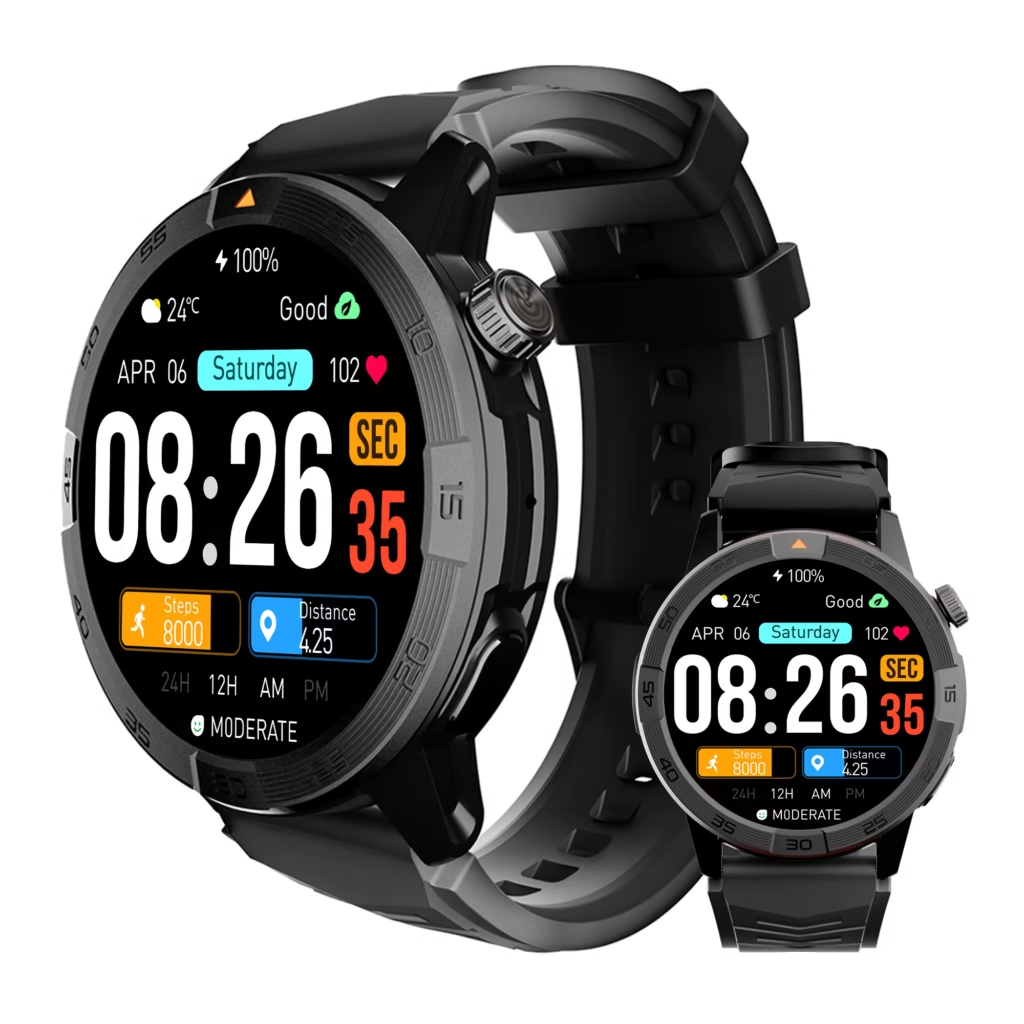
For a mixed everyday lifestyle, Omarek occupies a practical middle position. It offers essential activity visibility alongside connected functions such as Bluetooth calling, built-in GPS, offline maps, notifications, and music control. Buyers who analyze training load, recovery, or structured performance plans need a deeper system. Those who want only a compact step count may spend less on a simpler tracker.
The purchase starts by identifying the buyer’s real schedule. A clear smartwatch role definition prevents attractive metrics from taking over a decision that should be based on daily use.
Which Fitness Numbers Matter in Your Actual Week?
A lifestyle profile should answer three commercial questions before a watch receives the order: when will the information appear, what decision can it influence, and how much effort will the buyer give to reviewing it?
The Lifestyle Data Menu below removes numbers that have no practical job. Each buyer keeps only the signals that can change something inside the schedule.
Commuter Profile: Movement Between Fixed Stops
Schedule pressure: Travel time, platform changes, parking, office hours, and evening errands divide the day into short movement windows.
Useful signal: Steps, general activity totals, and sedentary reminders can reveal whether the commute created meaningful movement or merely long periods of sitting in different places.
Practical response: The buyer might walk a longer route between the station and office, take the stairs, or add a short movement period after arriving home.
Review moment: A quick check near the end of the workday is more useful than repeatedly opening a dashboard during transit.
Remove from the menu: Advanced recovery scores, running dynamics, and detailed training-load analysis have little purchase value when they do not affect the commute.
Acceptable ownership effort: Notifications, calls, and activity information should be available without requiring frequent phone handling or a lengthy post-work review.
Remote-Work Profile: Movement Must Be Deliberately Created
Schedule pressure: Meetings, messages, focused work, and household responsibilities can keep the buyer in the same room for hours.
Useful signal: Sedentary reminders and general activity information matter more than a large library of sports metrics.
Practical response: A reminder should lead to a specific action such as standing, walking through the home, stretching, or completing a planned break.
Review moment: The late-afternoon check should answer whether movement breaks occurred—not whether the watch stored another full day of passive data.
Remove from the menu: Metrics that generate additional screen checking without changing the workday should not influence the purchase.
Acceptable ownership effort: The watch needs to fit a low-friction routine. Complicated syncing or excessive alerts may simply add another source of interruption.
A night-shift worker can use the same profile without forcing the routine into a midnight-to-midnight calendar. Activity and sleep information should be reviewed around the person’s actual waking period rather than a conventional daytime schedule.
Weekend-Hiker Profile: Light Weekday Use and Longer Outdoor Sessions
Schedule pressure: Ordinary weekdays may involve little formal exercise, while one weekend block carries most of the buyer’s planned activity.
Useful signal: General activity information, route access, elapsed activity context, and navigation support can be more relevant than maintaining a perfect daily streak.
Practical response: The buyer can confirm that the planned outing began, keep general progress visible, and use supported navigation tools when needed.
Review moment: A short post-outing review should determine whether the planned activity was completed and whether the watch remained practical throughout the trip.
Remove from the menu: Specialist elevation analysis, expedition tools, advanced endurance metrics, and continuous-GPS promises should not receive purchase credit unless they are documented and required.
Acceptable ownership effort: The device should remain useful during the workweek so the buyer is not paying for hardware that matters only a few Saturdays each month.
Travel weeks should be treated as separate context. Airport sitting, hotel schedules, time-zone changes, and sightseeing can distort comparisons with an ordinary week. The buyer needs useful perspective, not a warning that every change represents lost progress.
Recreational Gym Profile: Completion Matters More Than Analysis
Schedule pressure: Work, family plans, and gym hours determine whether two or three familiar sessions happen each week.
Useful signal: Workout completion, general activity, and broad heart-rate context may be enough for a buyer who is not following a data-led training program.
Practical response: The information should help confirm attendance, compare familiar effort, or support returning for the next planned session.
Review moment: The useful question is often “Did I complete the session?” rather than “How many advanced metrics can I analyze afterward?”
Remove from the menu: Readiness scores, detailed recovery guidance, running dynamics, and advanced coaching add little value when the buyer will not use them to modify training.
Acceptable ownership effort: Starting and reviewing a familiar workout should require little setup. A complicated analytical platform may become a reason to stop tracking.
Weekend-only exercisers do not need to manufacture activity data during the rest of the week to justify the watch. The product should support the planned sessions and remain useful for ordinary connected tasks between them.
These profiles do not rank buyers from basic to advanced. They identify which information deserves space on the wrist.
Someone who feels drawn toward health-related metrics should first separate routine wellness awareness from advanced or medical goals. General activity information should not be mistaken for diagnosis or medical reassurance.
Match the Monitoring System to the Lifestyle Profile
Once the schedule is clear, the product decision becomes narrower. The buyer is no longer shopping for the monitor with the greatest number of capabilities. The goal is to purchase the monitoring depth that fits the weekly routine.
For the commuter: pay for wrist utility only when it reduces phone friction
A simple tracker can cover the commuter whose complete requirement is steps and movement visibility. That buyer may gain little from a larger watch, onboard navigation, calling, or extensive notification controls.
Omarek becomes the stronger commercial fit when activity information shares the wrist with functions used during the commute. Bluetooth calling may reduce the need to pull out a phone for a brief conversation. Notifications can keep selected updates visible. Built-in GPS and offline maps may support general navigation away from the usual route.
The broader feature set deserves the additional spending only when the commuter will actually use it. Apply the activity-tracker consolidation test to identify recurring phone interactions that could move to the wrist.
Buyers who expect wrist calls to drive the purchase should also review how calling and notification functions fit real daily situations. A feature should solve a repeated inconvenience, not merely look impressive in the cart.
For the remote worker: select the least distracting system that produces movement
A narrow activity tracker may be sufficient for a remote worker who needs one reliable movement prompt and a simple progress check.
Omarek makes more sense when reminders are combined with calendar access, alarms, notifications, general activity information, and calling. Those functions can support a workday spread across meetings, household tasks, and short movement breaks.
The wrong purchase is the system that creates more digital work than physical movement. A watch filled with alerts, scores, and dashboards can increase interruption without changing seated behavior.
Remote workers who value limited setup should compare the ownership burden through the low-maintenance smartwatch test. Paying for a deeper platform is difficult to justify when the buyer does not plan to study its reports.
For the weekend hiker: separate general navigation from specialist outdoor analysis
Omarek is commercially attractive for a weekend hiker who also wants a connected everyday watch. The current listing documents built-in GPS, offline maps, activity tracking, a compass, an altitude meter, calls, notifications, and music control.
That combination can support general outings while keeping the watch relevant Monday through Friday. It should not be interpreted as proof of specialist navigation accuracy, documented extended-GPS runtime, advanced elevation analysis, or expedition-level performance.
A dedicated outdoor platform is the better purchase when the route requires specialized maps, detailed elevation planning, advanced endurance information, emergency communication, or verified long-duration navigation performance.
The decision is not “general watch versus better watch.” It is whether the buyer’s real outings require specialist hardware. A recreational trail visit and a technical backcountry plan do not create the same monitoring requirement.
Buyers still comparing tracker and smartwatch categories can use the fitness-tracker upgrade guide to decide whether weekday utility supports the larger purchase.
For the recreational gym member: avoid paying for analysis that will not change the program
Omarek fits a gym member who wants to start familiar activities, view general progress, check broad heart-rate context, and confirm that the planned session occurred.
A deeper analytical platform belongs with buyers who repeatedly use structured coaching, recovery information, training readiness, detailed performance metrics, or programmed progression. Those tools justify their complexity only when they affect the next workout.
The everyday buyer should not assume that more post-workout data produces more progress. A watch that makes the session easy to begin and simple to confirm may support repetition better than an analytical system that goes unopened.
The fitness-feature value comparison helps remove metrics that do not affect ordinary exercise decisions. Buyers focused on consistent routines can also compare how a fitness smartwatch fits everyday training.
Why Omarek Works for Mixed Everyday Lifestyles
Omarek’s strongest position is not specialist leadership. Its value comes from covering the essential monitoring needs of buyers who move between work, errands, commuting, recreation, and connected daily tasks.
Essential Monitoring Without Specialist Complexity
The watch is currently listed at $150 with free shipping. Its documented monitoring tools include activity and fitness tracking, steps, calories, heart-rate monitoring, sleep tracking, multisport modes, Breath Monitoring, and sedentary reminders.
Each tool needs a lifestyle job:
Steps and activity information help a commuter or remote worker decide whether additional movement belongs in the day.
Sedentary reminders can interrupt a long desk period, flight, drive, or meeting block when the wearer has already decided what physical response will follow.
General heart-rate information adds broad context during a familiar gym session, walk, or recreational activity without turning the watch into a medical instrument.
Sleep tracking may help buyers compare broad routines across regular workdays, night shifts, weekends, and travel periods.
Multisport modes can support starting and reviewing ordinary activities, although the listing does not document structured coaching, exercise recognition, or specialist performance analysis.
Built-in GPS and offline maps broaden the watch’s use for general navigation, but buyers should not assume superior accuracy or a specific continuous-GPS runtime.
Connected Functions Add Value Beyond Exercise
The connected layer gives Omarek its mixed-lifestyle advantage. Bluetooth calling, notifications, social alerts, music control, alarms, calendar access, a compass, and altitude information may keep the device relevant outside a workout.
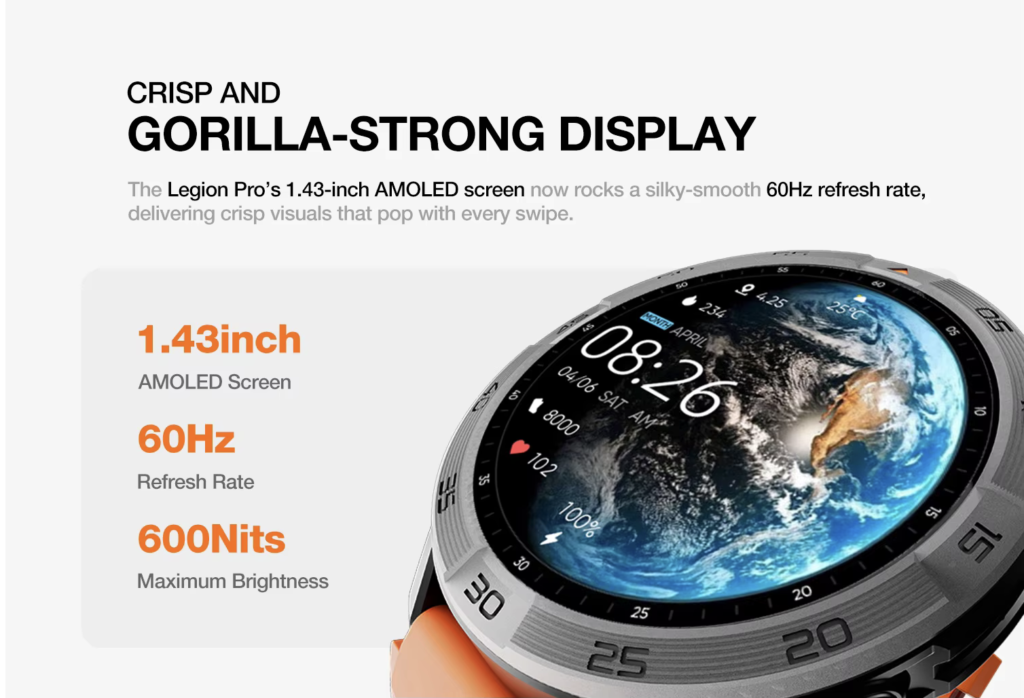
That broader use creates a clear purchase threshold. Omarek earns the $150 budget most convincingly when the Lifestyle Data Menu identifies at least one essential monitoring use and one recurring connected use.
A buyer who needs only steps may be better served by a less expensive tracker. Someone who needs training readiness, advanced recovery, detailed running metrics, adaptive plans, or specialist outdoor analysis should put the budget toward a deeper platform.
Charging Must Fit the Buyer’s Real Schedule
Omarek’s seller states that the 370mAh battery can provide up to 30 days of use. Actual runtime may be shorter with GPS, calling, maps, notifications, display activity, Bluetooth use, and personal settings. The maximum should be treated as a seller-stated ceiling rather than an everyday guarantee.
Charging fit still matters commercially. A commuter may prefer charging during a quiet evening. A night-shift worker may use a daytime sleep period. A weekend hiker should check the battery before leaving rather than assuming the maximum specification covers every outdoor session.
Buy for the Routine That Will Continue
Buyers deciding how much workout depth they really need can apply the 90-day fitness-watch value check. The goal is to purchase for the routine likely to continue, not the most ambitious week imagined during checkout.
Build a Monitoring Routine Before Buying the Watch
A product should enter the cart only after the buyer can describe how monitoring will work inside the real week.
Decide when the information will be checked
A commuter may review activity before leaving the office. A remote worker could check after the final meeting block. The weekend hiker may review one outing after returning home, while the gym member might confirm completion before leaving the parking lot.
Review timing should match the schedule rather than a generic streak. Night-shift workers can define a personal day around waking and sleeping times. Buyers with variable hours may gain more from a weekly pattern than from comparing every calendar day.
A monitor that demands constant attention is a poor fit for someone seeking low-friction awareness. Advanced analytics should be purchased only when the buyer has reserved time to interpret them.
Name the action that may follow
Steps might lead to an evening walk. An inactivity reminder could produce a short standing break. General workout information may confirm that a planned session happened. A broad sleep pattern can prompt a review of bedtime or work scheduling.
Information without a response should be removed from the Lifestyle Data Menu. This prevents the purchase from becoming a subscription to numbers that never affect the day.
The goal-to-behavior watch comparison can help buyers translate broad wellness language into one supportable action.
Set a realistic review burden
Some buyers want a ten-second glance. Others willingly study trends after every workout. The product needs to match that level of attention.
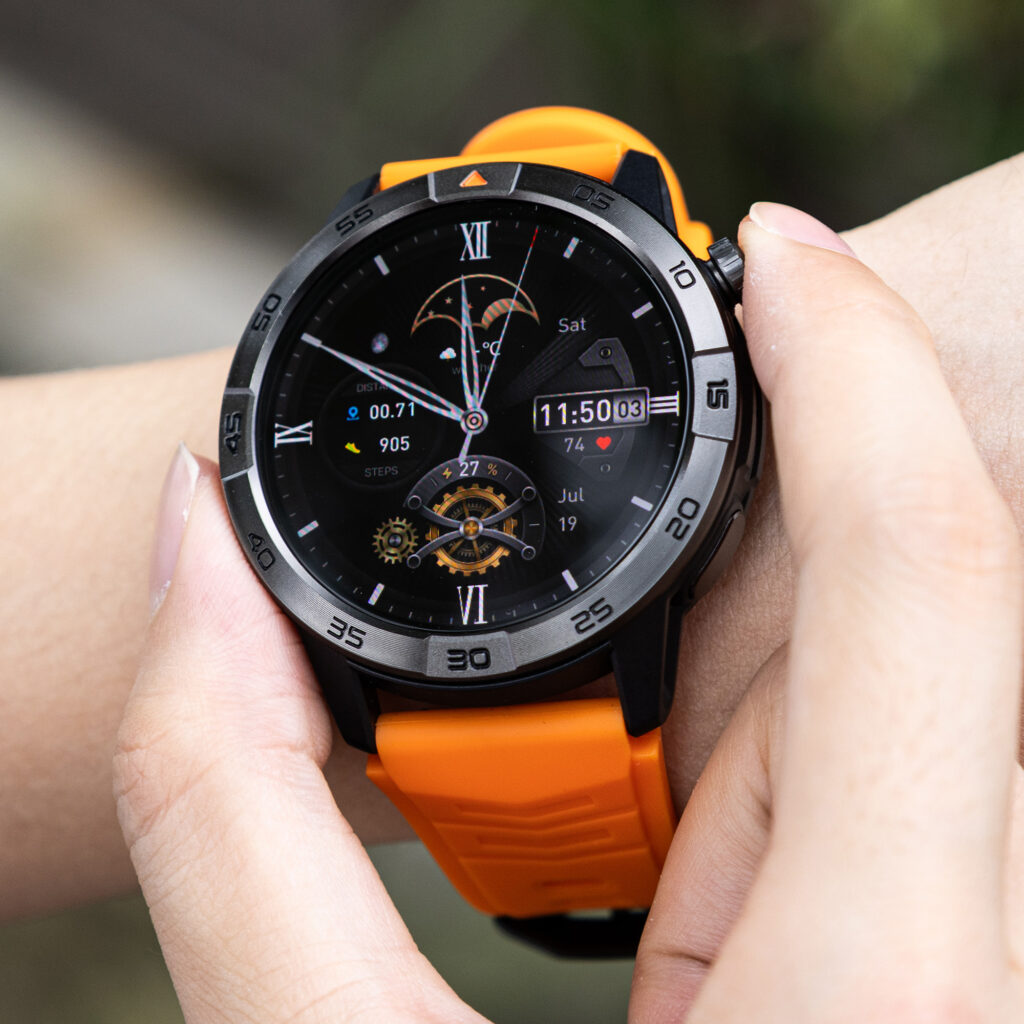
A simple tracker fits narrow visibility. Omarek occupies the middle for essential monitoring plus useful connected functions. An analytical platform belongs with buyers prepared to review deeper training information and change their program because of it.
Travel weeks require additional judgment. A long drive, airport wait, hotel stay, or time-zone change should not be compared blindly with an ordinary home routine. The watch should provide context without turning temporary disruption into a false purchasing problem.
Confirm phone and household practicality
Omarek lists compatibility with iOS and Android, but buyers should still verify the companion app, permissions, syncing behavior, and notification controls required by their specific phone.
The phone compatibility decision guide helps identify functions that must work after pairing. Android users can go further by checking the required smartwatch app before ordering.
Sharing one phone can create account and syncing friction. Two wearers should not assume that one app session will maintain separate histories, notifications, and preferences correctly. Confirm whether each watch needs its own account, phone connection, or regular synchronization process before buying for a household.
Review the complete U.S. checkout decision
The displayed price is only one part of the purchase. Review the final total, including any applicable sales tax, accessories, replacement straps, and optional services. Confirm current shipping, return, refund, warranty, and support terms before placing the order.
Use the final smartwatch checkout checks to verify fit, app access, required features, ownership effort, and seller terms.
The lifestyle decision now has four possible outcomes.
A narrow tracker receives the budget when one or two simple numbers cover the complete requirement and broader wrist functions would remain unused.
Omarek becomes the purchase match when essential activity visibility works across several settings and calling, notifications, maps, or daily controls add recurring value beyond exercise.
An analytical platform is warranted when advanced training information regularly changes workouts, recovery decisions, route planning, or structured progression.
The cart should remain empty when the buyer cannot identify a useful number, a review moment, and a realistic response.
After delivery, the first-week smartwatch verification process should test comfort, activity access, reminders, calls, maps, app syncing, notifications, charging behavior, and the exact monitoring routine that justified the order.
Put Only the Useful Numbers on Your Wrist
The Omarek purchase becomes commercially sound when the buyer’s Lifestyle Data Menu contains essential signals that will be checked and connected features that will be used throughout the same week.
Move the $150 budget toward Omarek when steps, general activity information, sedentary reminders, sleep tracking, heart-rate context, or ordinary workout records support real decisions—and a deeper analytical platform would add work without changing the routine.
A commuter can keep activity and selected communications visible. A remote worker can connect movement prompts with scheduled breaks. A weekend hiker can combine general activity and navigation functions with weekday smartwatch use. A recreational gym member can confirm familiar sessions without paying for an unused coaching system.
The watch earns its place by serving the lifestyle after the workout ends.